


How Long Does a New Roof Actually Last?
A new roof is a significant investment, and it’s natural to want a clear idea of what you’re getting for your money. The honest answer is: it depends — on the materials used, the quality of installation, your roof’s exposure to the elements, and how well it’s maintained over time.
Here’s a practical guide to expected roofing lifespans in the UK, along with the factors most likely to cut that lifespan short.
Typical Lifespan by Roofing Material
Concrete and Clay Tiles
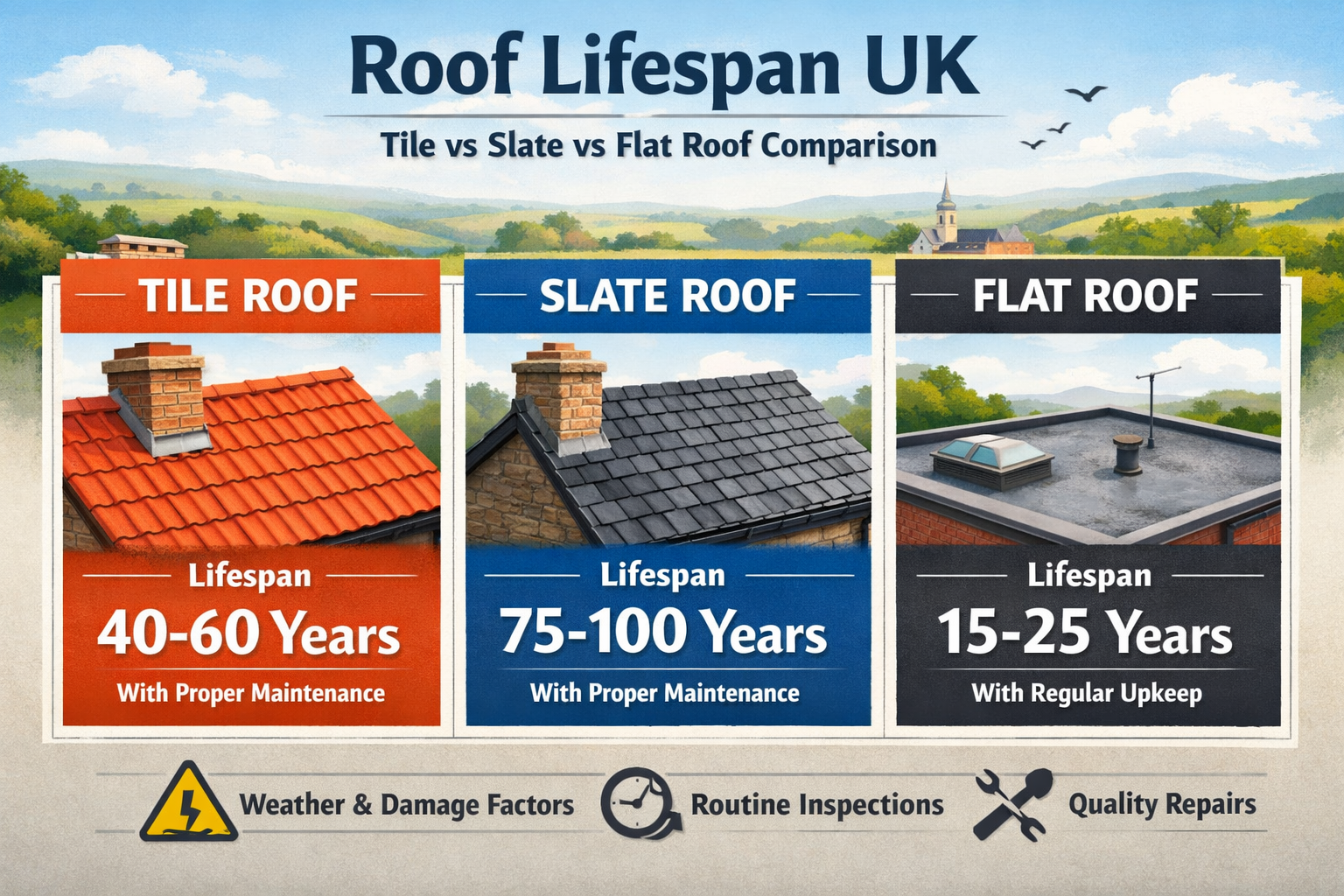
A quality tiled pitched roof, properly installed and regularly maintained, should last 40–60 years. Clay tiles are generally more durable than concrete and can outlast them by a decade or more, making them a worthwhile investment on older or character properties.
Natural Slate
Genuine Welsh or Spanish slate is one of the most durable roofing materials available. Well-laid natural slate roofs can last 80–100 years, making them a genuinely long-term investment despite the higher upfront cost. Many Victorian-era properties in Norfolk still have their original slate.
Flat Roofs
Lifespan varies significantly by system: torch-on felt typically lasts 15–20 years, EPDM rubber 40–50 years, and GRP fibreglass 25–40 years. The single biggest variable is installation quality — a poorly installed EPDM roof won’t last anything like 40 years.
UPVC Fascias and Soffits
Well-installed UPVC roofline products typically last 20–30 years with very little maintenance required, making them a cost-effective long-term choice over timber alternatives.
What Reduces Roof Lifespan?
Even the highest-quality materials will underperform if the following factors are left unchecked:
- Poor ventilation — trapped moisture accelerates timber decay and tile deterioration
- Blocked gutters — water backing up behind fascia boards causes rot and structural damage
- Moss and lichen — organic growth traps moisture and forces tiles apart over time
- Neglected flashing — cracked or lifted flashing is one of the most common causes of premature roof failure
- Storm damage left unrepaired — even small breaches worsen rapidly under subsequent rainfall
How to Protect Your Roof Investment
The simplest and most cost-effective approach is consistent, low-effort maintenance: an annual visual check from ground level, gutters cleared twice a year, and a professional inspection every 5–7 years. Small repairs carried out promptly are vastly cheaper than replacing sections of roof after extended water damage has taken hold.
MHL Roofing offers roof maintenance and inspection services across Norwich and the surrounding areas, helping homeowners identify and address problems before they become expensive.
| 📋 Book a Roof Health Check
Fill in our contact form at mhlroofing.co.uk One-off inspections and ongoing maintenance — Norwich & Norfolk |
Want more roofing tips and advice?
Head to the MHL Roofing blog at mhlroofing.co.uk for more guides, maintenance tips, and answers to the questions homeowners ask us most. While you’re there, you can also request a free, no-obligation quote — it takes less than a minute.
Follow us for regular roofing advice, project updates, and local tips:
- Facebook: https://www.facebook.com/mhlroofinguk/
- Instagram: https://www.instagram.com/mhlroofing
- Website: https://www.mhlroofing.co.uk
